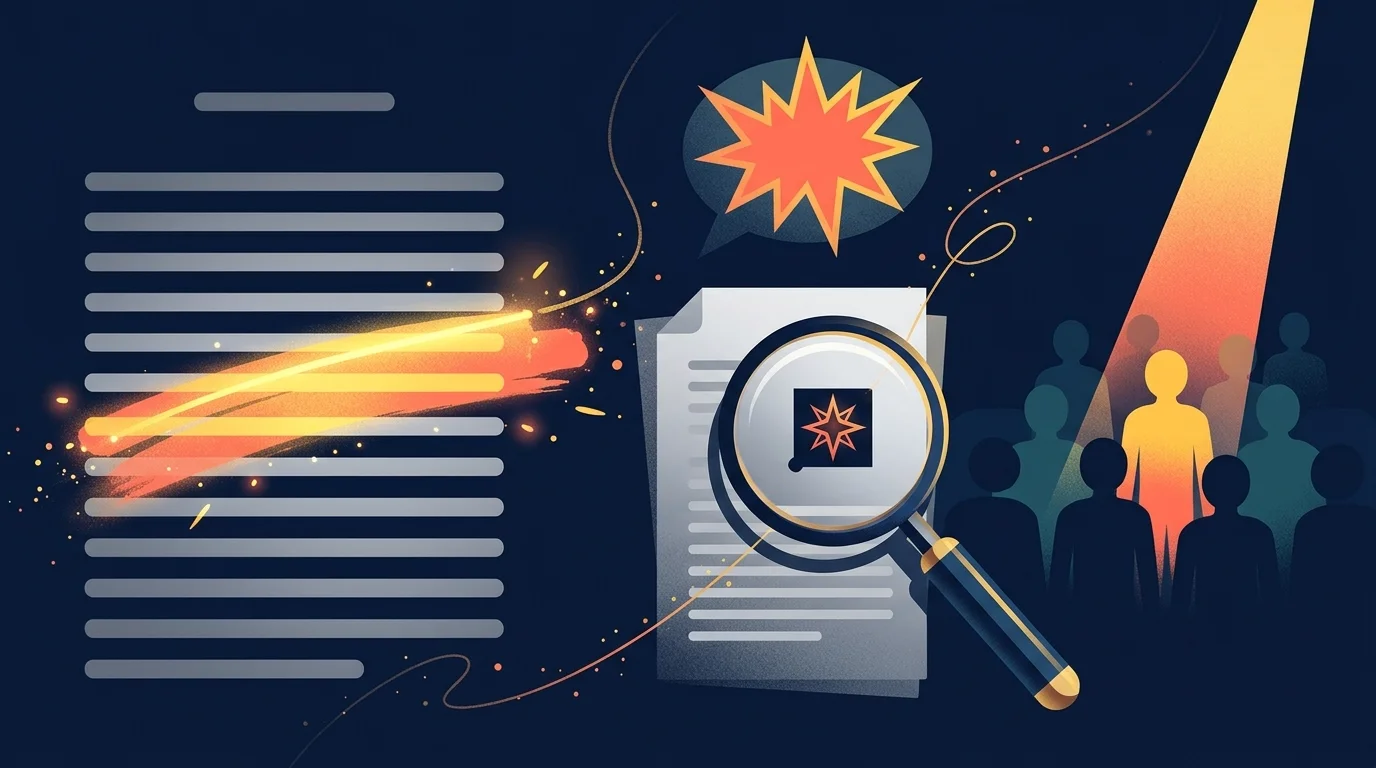
Common words for emphasizing include stressing, highlighting, and underlining. For a formal tone, underscoring and accentuating also fit well. Each choice shows a slightly different kind of focus.
The best word depends on the sense. Emphasizing can mean giving weight to a point, making a thing stand out, or speaking with force. This list shows each word as a base verb. Add “-ing” to use it like emphasizing.
Quick list: stress, highlight, underline, underscore, accentuate, spotlight, reiterate, play up, hammer home
This article looks at 30 alternatives. You will find meanings, IPA, usage notes, examples, and context for each word.
At a Glance: Emphasizing Synonyms and Related Alternatives
| Alternative | Part of Speech | Meaning | Register / Tone | Ideal Context |
| Stress | Verb | Give extra weight to a point | Neutral | Talks, lessons |
| Highlight | Verb | Make something stand out | Neutral | Reports, slides |
| Underscore | Verb | Stress a point with force | Formal | News, essays |
| Accentuate | Verb | Make a feature easier to see | Formal | Design, fashion |
| Spotlight | Verb | Focus attention on one thing | Figurative | Media, events |
| Reinforce | Verb | Make a point stronger | Neutral | Teaching, speeches |
| Reiterate | Verb | Say a point again | Formal | Meetings, speeches |
| Play up | Phrasal verb | Make something seem more important | Informal | Sales, ads |
| Set off | Phrasal verb | Make something stand out by contrast | Neutral | Design, art |
| Italicize | Verb | Print text in slanted type | Literal | Writing |
Which Word Should You Use?
| If you want to… | Use | Why |
| Give weight to a point in a talk | Stress | It is clear and common. |
| Show that a fact matters in a report | Underscore | It sounds formal and firm. |
| Mark a word in your notes | Underline or italicize | Both fit written text. |
| Make a design detail stand out | Accentuate or set off | Both fit looks and style. |
| Repeat a point on purpose | Reiterate | It shows you say it again. |
| Draw public attention to a topic | Spotlight | It fits news and events. |
| Make a product sound better | Play up | It fits ads and sales talk. |
| Press a point very hard | Hammer home | It is informal and strong. |
Exploring the Multiple Meanings of “Emphasizing”
1. Giving special weight to a point
- Meaning: Showing that something matters more than other things.
- Explanation: This is the most common sense. Speakers and writers use it daily.
- Example: The doctor is emphasizing the need for more sleep.
2. Making something stand out
- Meaning: Making a thing easier to see or notice.
- Explanation: This sense fits design and layout. It also fits looks and fashion.
- Example: Designers emphasize headings with bold type and extra space.
3. Speaking with extra force
- Meaning: Saying a word with more strength or volume.
- Explanation: This sense is about speech. Teachers often use the word “stress” here.
- Example: She is emphasizing the last word to show her anger.
4. Drawing out a feature
- Meaning: Making one trait look stronger than the rest.
- Explanation: Makeup, art, and photos use this sense. It often shows up in fashion talk.
- Example: Dark liner emphasizes her eyes in the photo.
Sources: Merriam-Webster, Collins Dictionary, Dictionary.com.
Analyzing 30 Emphasizing Alternatives in Detail
Some alternatives are direct synonyms. Others are related words that fit only certain cases.
Core Words for Stressing a Point
1. Stress
IPA: /strɛs/ (US and UK)
Definition: It means to give extra weight to a point. It also means to say a word with more force.
- Usage: This is the closest everyday synonym. However, it can also mean worry.
- Example: The teacher stressed the need to arrive on time.
2. Highlight
IPA: /ˈhaɪlaɪt/ (US and UK)
Definition: It means to make something stand out. It also can mean to mark text with a bright pen.
- Usage: It is a close synonym in speech and writing. For example, a report can highlight key facts.
- Example: The report highlights three big risks for small farms.
3. Underline
IPA: US /ˌʌndərˈlaɪn/ · UK /ˌʌndəˈlaɪn/
Definition: It means to draw a line under a word. It also shows that a point matters.
- Usage: It works for both literal and figurative cases. Still, the figurative sense sounds firm.
- Example: Her answer underlined how much she cared about the project.
4. Underscore
IPA: US /ˌʌndərˈskɔːr/ · UK /ˌʌndəˈskɔː/
Definition: It means to stress a point with force. It also can mean a line under text.
- Usage: It is a close, slightly formal match. In fact, news writers use it often.
- Example: The latest data underscores the need for action.
5. Accentuate
IPA: US /ækˈsɛntʃueɪt/ · UK /əkˈsɛntʃueɪt/
Definition: It means to make a feature easier to see. It also shows a trait in a sharper way.
- Usage: It is a close, formal word. For example, lighting can accentuate a room’s shape.
- Example: The red scarf accentuates her plain gray coat and hat.
6. Reinforce
IPA: US /ˌriːɪnˈfɔːrs/ · UK /ˌriːɪnˈfɔːs/
Definition: It means to make a point stronger by adding support. It also means to make a thing firmer.
- Usage: It is a related word, not an exact synonym. However, it fits “reinforce a message.”
- Example: The coach reinforced the message with a short story.
Drawing Attention
7. Spotlight
IPA: US /ˈspɑːtlaɪt/ · UK /ˈspɒtlaɪt/
Definition: It means to focus attention on one thing. It also names a bright light on stage.
- Usage: It is a figurative, close match. For example, a story can spotlight a problem.
- Example: The film spotlights the work of local nurses.
8. Showcase
IPA: US /ˈʃoʊkeɪs/ · UK /ˈʃəʊkeɪs/
Definition: It means to show something at its best. It also names an event for that purpose.
- Usage: It is related, as it adds pride to emphasis. Still, it fits skills and products best.
- Example: The fair showcases art from young students across the city.
9. Feature
IPA: US /ˈfiːtʃər/ · UK /ˈfiːtʃə/
Definition: It means to give a thing a main place. It also means to include it as a key part.
- Usage: It is a related word for media and design. However, it shows placement more than force.
- Example: The magazine features a famous chef on its cover.
10. Flag
IPA: /flæɡ/ (US and UK)
Definition: It means to mark something so people notice it. It also means to signal a problem.
- Usage: It is informal and common at work. For example, a manager can flag a late task.
- Example: Please flag any errors before you send the file.
11. Foreground
IPA: US /ˈfɔːrɡraʊnd/ · UK /ˈfɔːɡraʊnd/
Definition: It means to place something at the front of attention. It also is a term in art.
- Usage: It is a formal, rare verb. Still, it suits essays and design talk.
- Example: The author foregrounds family ties in the early chapters.
12. Draw attention to
IPA: /ˌdrɔː əˈtɛnʃən tuː/ (US and UK)
Definition: It means to make people look at something. It also shows a gentle way to point.
- Usage: This phrase is clear and neutral. In fact, it is easy for learners.
- Example: She drew attention to a mistake in the budget.
Strong Statements and Repeating
13. Assert
IPA: US /əˈsɜːrt/ · UK /əˈsɜːt/
Definition: It means to state a view with confidence. It also shows that you will not back down.
- Usage: It is related, as it stresses a claim. However, it often adds a bold tone.
- Example: He asserted that the plan would save money.
14. Affirm
IPA: US /əˈfɜːrm/ · UK /əˈfɜːm/
Definition: It means to say that something is true. It also shows firm support for it.
- Usage: It is a formal, related word. For example, leaders affirm their goals.
- Example: The mayor affirmed her support for the new park.
15. Reaffirm
IPA: US /ˌriːəˈfɜːrm/ · UK /ˌriːəˈfɜːm/
Definition: It means to say again that you back something. It also shows that a view has not changed.
- Usage: It is related and formal. Still, it adds the idea of “once more.”
- Example: The company reaffirmed its promise to every customer last week.
16. Reiterate
IPA: /riˈɪtəreɪt/ (US and UK)
Definition: It means to say something again. It also can make a point firmer.
- Usage: It is a close match for repeated stress. However, it sounds formal.
- Example: Let me reiterate that the deadline is Friday.
17. Insist on
IPA: US /ɪnˈsɪst ɑːn/ · UK /ɪnˈsɪst ɒn/
Definition: It means to demand that something is done or noticed. It also shows a firm view.
- Usage: It is related, as it adds pressure. For example, you can insist on quality.
- Example: He insists on clear rules for every project.
18. Hammer home
IPA: US /ˌhæmər ˈhoʊm/ · UK /ˌhæmə ˈhəʊm/
Definition: It means to make a point very strongly. It also shows steady repeating.
- Usage: It is informal and figurative. In fact, it often feels forceful.
- Example: The ad hammers home the value of saving early.
Making Stronger or Bigger
19. Heighten
IPA: /ˈhaɪtn/ (US and UK)
Definition: It means to make something stronger. It also can mean to raise a level.
- Usage: It is related, not an exact synonym. For example, music can heighten fear.
- Example: The dark sky heightened the mood of the scene.
20. Amplify
IPA: /ˈæmplɪfaɪ/ (US and UK)
Definition: It means to make something louder or stronger. It also can spread a message wider.
- Usage: It is related to the figurative sense. Still, it adds the idea of volume.
- Example: Social media can amplify a small complaint into a big story.
21. Magnify
IPA: /ˈmæɡnɪfaɪ/ (US and UK)
Definition: It means to make something look bigger. It also can make a problem seem worse.
- Usage: It is related and often has a negative tone. However, it works for small details.
- Example: Fear can magnify small worries late at night in bed.
22. Intensify
IPA: /ɪnˈtɛnsɪfaɪ/ (US and UK)
Definition: It means to make something stronger or sharper. It also shows rising force.
- Usage: It is related and fits feelings. For example, noise can intensify pain.
- Example: The new law intensified the debate in town.
Writing and Speaking Tools
23. Italicize
IPA: /ɪˈtælɪsaɪz/ (US and UK)
Definition: It means to print text in slanted type. It also shows that a word needs stress.
- Usage: It is the literal, writing sense of emphasize. However, it fits only text.
- Example: Italicize the key terms in your notes before the test.
24. Punctuate
IPA: /ˈpʌŋktʃueɪt/ (US and UK)
Definition: It means to break speech with a sharp remark or sound. It also means to add marks to writing.
- Usage: It is a related word. In fact, it fits points made in speech.
- Example: She punctuated her talk with bold hand gestures.
25. Belabor
IPA: US /bɪˈleɪbər/ · UK /bɪˈleɪbə/
Definition: It means to stress a point too long. It also shows that a speaker repeats too much.
- Usage: It is related, with a negative tone. However, it does not show strong praise.
- Example: I will not belabor the point any further.
26. Dwell on
IPA: US /ˈdwɛl ɑːn/ · UK /ˈdwɛl ɒn/
Definition: It means to think or talk about something at length. It also can show worry.
- Usage: It is related, not a synonym. Still, it shows heavy focus.
- Example: He tried not to dwell on the loss.
Style, Looks, and Selling
27. Play up
IPA: /ˌpleɪ ˈʌp/ (US and UK)
Definition: It means to make something seem more important. It also can mean to boost a trait.
- Usage: It is informal and common. For example, ads play up the best features.
- Example: The agent played up her skills in the interview.
28. Set off
IPA: US /ˌsɛt ˈɔːf/ · UK /ˌsɛt ˈɒf/
Definition: It means to make something stand out by contrast. It also shows a nice match.
- Usage: It is related and fits fashion or design. In fact, a dark frame can set off a bright photo.
- Example: A white wall sets off the bold painting.
29. Enhance
IPA: US /ɛnˈhæns/ · UK /ɪnˈhɑːns/
Definition: It means to improve or raise the quality of something. It also can make a feature clearer.
- Usage: It is related, as it adds value rather than stress. However, it fits looks well.
- Example: The soft light enhances the color of the wood.
30. Flatter
IPA: US /ˈflætər/ · UK /ˈflætə/
Definition: It means to make someone look good. It also shows a style that suits them.
- Usage: It is related, and it fits fashion talk. For example, a cut can flatter your shape.
- Example: That blue dress flatters her eyes and skin.
Sources: Merriam-Webster, Collins Dictionary and Thesaurus, Dictionary.com.
Emphasize vs. Emphasise: US and UK Spelling
The word has two common spellings. Both are correct, but regions favor one.
| Form | US Spelling | UK Spelling |
| Base verb | emphasize | emphasise |
| Past form | emphasized | emphasised |
| -ing form | emphasizing | emphasising |
| Noun | emphasis | emphasis |
The noun is the same in both. However, British writers often prefer “-ise.” Some British style guides also accept “-ize.”
Sources: Merriam-Webster, Collins Dictionary.
Emphasizing and Opposite/Paired Word Pairs
| Word | Paired Word | Note |
| Emphasize | Downplay | The most natural opposite in everyday use |
| Emphasize | Play down | Informal phrasal version of downplay |
| Emphasize | De-emphasize | A formal word for lowering focus |
| Emphasize | Understate | Fits claims and numbers |
| Play up | Play down | A common informal pair |
Downplay is the clearest opposite. However, the best pair depends on tone. For example, “play up” and “play down” fit casual talk.
Sources: Merriam-Webster, Collins Dictionary.
Common Word Partners of “Emphasizing”
| Pattern | Common Partners | Example |
| Emphasize + noun | importance, need, point, value | The guide emphasizes the value of rest. |
| Emphasize + that | that safety comes first | She emphasized that safety comes first. |
| Adverb + emphasize | strongly, repeatedly, heavily | Doctors repeatedly emphasize hand washing. |
| Emphasize + contrast | differences, similarities | The essay emphasizes the similarities between two towns. |
| Emphasize + strengths | skills, strengths, benefits | Her résumé emphasizes teamwork skills. |
| Emphasize + feature | eyes, shape, color | The cut emphasizes her height. |
Sources: Collins Dictionary, Merriam-Webster.
Idiomatic Phrases Featuring “Emphasizing”
The verb has no true idioms. These are established expressions that use the same word family.
1. For emphasis
- Meaning: An established expression that means to add stress to a point.
- Example: She said the word twice for emphasis.
2. Emphasis added
- Meaning: A fixed note that shows the writer changed the type in a quote.
- Example: The author wrote “emphasis added” after the quoted line.
3. Put the emphasis on
- Meaning: An established expression that means to treat something as most important.
- Example: The school puts the emphasis on reading.
4. Cannot be overemphasized
- Meaning: A fixed phrase that means something is extremely important.
- Example: The value of a good night’s sleep cannot be overemphasized.
Sources: Merriam-Webster, Collins Dictionary, Dictionary.com.
Word Formation of “Emphasizing”
Etymology and Structure
The verb comes from the noun emphasis. English adds the ending “-ize” to form it. The noun traces back to a Greek word that means “appearance” or “indication.”
Date and History
Etymonline dates the noun to the 16th century. The verb emphasize appears later, in the 18th century.
Word Class Variations
- Verb: emphasize (UK: emphasise)
- Noun: emphasis (plural: emphases)
- Adjective: emphatic
- Adverb: emphatically
- Related verbs: overemphasize, de-emphasize
The form “emphasizing” is the present participle. It also works as a gerund in a sentence.
Sources: Etymonline, Merriam-Webster.
Common Word Choice Mistakes
- “Emphasize on safety”: say “emphasize safety” or “put emphasis on safety.”
- “Emphasis about quality”: say “emphasis on quality.”
- “Emphasize about the cost”: say “emphasize the cost.”
- “Stressing out the point”: say “stressing the point.”
- “One emphases”: say “one emphasis.” The plural is “emphases.”
- “Accentuate on her eyes”: say “accentuate her eyes.”
Frequently Asked Questions
What is the closest synonym for emphasizing?
Stressing is the closest everyday choice. Highlighting is also very close.
What is a formal alternative?
Underscoring and accentuating suit formal writing. Reiterating fits speeches and meetings.
What is an informal alternative?
Playing up and hammering home are casual choices. Both sound natural in speech.
What is the difference between emphasize and stress?
Stress is shorter and also means worry. Emphasize is clearer in formal writing.
What is the difference between emphasize and highlight?
Highlight often means making something visible. Emphasize focuses on weight and importance.
What is the opposite of emphasizing?
Downplaying is the usual opposite. De-emphasizing also works in formal text.
Is it emphasizing or emphasising?
Both are correct. US English uses “emphasizing,” and British English often uses “emphasising.”
What word fits repeated emphasis?
Reiterate and hammer home both fit. The second one sounds more forceful.
Which words fit fashion and design?
Accentuate, set off, and flatter fit best. Each shows a feature in a pleasing way.
Can things emphasize, or only people?
Things can emphasize too. For example, a photo can emphasize a mood.
Conclusion
The closest everyday alternatives are stress, highlight, and underline. Underscore and accentuate suit a formal tone. Play up and hammer home fit casual talk.
Context decides the best word. Emphasizing can mean weight, visibility, or vocal force. Each sense has its own set of choices.
Start by asking what you mean. Do you want to give weight, draw the eye, or repeat a point? Then pick the word that fits that sense.

Emily Johnson is a linguistics graduate and vocabulary specialist. She writes detailed synonym explanations and helps readers understand subtle differences between words, improving both writing and speaking skills. Synonyms help express ideas more clearly and precisely in English.